
Copa Airlines
All CompaniesFREE Pilot interview information and gouge
-
3 days after sending my documents I received a call from the Copa asking about the best date to go to Panama. after choosing the date I received the tickets. I arrived in Panama on Tuesday and were taken to the hotel. there was a reservation for 3 days and it could be extended for another day if necessary. There was also a credit available of $ 19 per meal during my stay at the hotel. The first day was the polygraph we should be ready at 7:15 and a driver would take us to the test site. The examiner was quiet the only tip on this phase is to tell the truth and take something to eat. the response of this test is given at the end of the day. If you get an email it's...
-
1.
First step of the interview was check my original document(passport, USA VISA, licenses, medical certificate…) the second step was like a personal interview, they asked me HR type questions, (view the study guide of this website). And then they ask three drugs related...
-
2.
Great experience, nice people to talk to, as expected, thanks to AviationInterviews...
-
3.
Copa contacted me like a week before the interview by phone and not by email, telling me that I can come to Panama to start all the tests. 3 days before the test they sent me my flight tickets and the schedule. We arrive the Sunday and then you can chill at the hotel where we have meals included up to 19$ per meal, then the Monday the polygraph at 7:15 you have to be outside and wait the minivan, they take you to an independent polygraph inspector and do the test it takes around 1h30. You...
-
4.
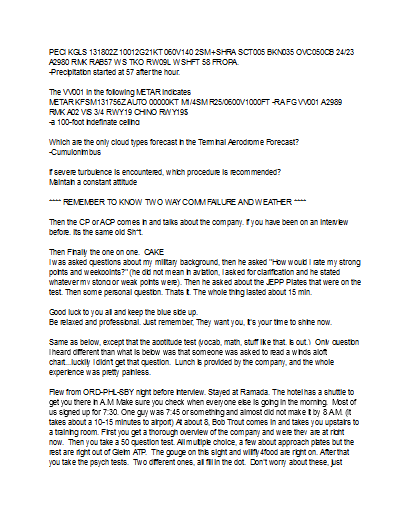
3 days after sending my documents I received a call from the Copa asking about the best date to go to Panama. after choosing the date I received the tickets. I arrived in Panama on Tuesday and were taken to the hotel. there was a reservation for 3 days and it could be extended for another day if necessary. There was also a credit available of $ 19 per meal during my stay at the hotel. The first day was the polygraph we should be ready at 7:15 and a driver would take us to the test site. The...
-
5.
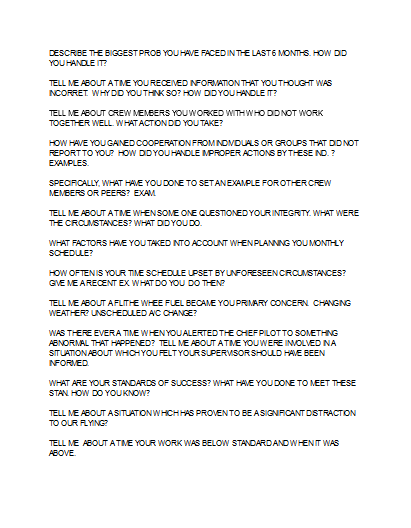
It all began and he shined in the Polygraph test. I could see that on three different days, eighteen pilots were submitted to the Polygraph and only seven went on to the next stage. There are basic differences in who makes the polygraph test in English and who does the test in Spanish. In Spanish they are much more invasive and authoritarian. I believe that if I had done the Polygraph in English I would go to the next...
-
6.
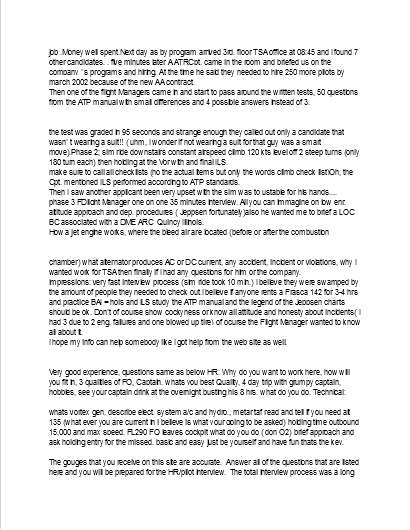
Compass test esta sin surpresa igual a lo que uno se prepara pero lo de matematica son 24 preguntas por solo 20 minutos. lo que hace que no se puede perder tiempo en cada una. Me falto llenar 3. 250 preguntas sobre la personalidad sin dificultad. Entrevista muy friendly pero debe de estar con cuidado respondiendo. Debe tener todo lo que se ha pedido como documentos y con su logbook certificado por su compañia o la autoridad civile. La entrevista duro casi 40 minutos. A otros le duro...
-
7.
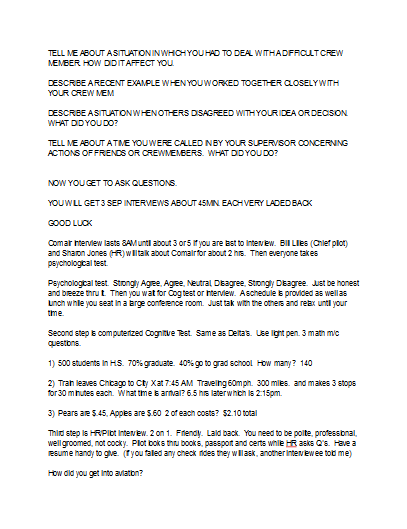
Well, I had the interivew, the sim and the poligraph. It was a good experience because they pay for everything. As everybody has been commenting, the interview is easy. You will be ok if you practice. I reccomend everybody to practice math. About the Aviation related questions. It is more related to aerodynamic of airline airplanes, Mmo, sweptwing airplane, some aeronautical decision making, etc. Relatively easy questions if you study. I suggest to read some info related to...
-
8.
Initial Arrival at Tocumen: You will notice there are not a lot of signs to get to baggage claim once off the aircraft. you are more or less let loose in the terminal. Good luck. Once through customs your driver (Chachito or Elia) Will be waiting outside in a white van with a COPA sign in the front window. Go to the north exit to find him he will not be inside. On your arrival day you will most likely go straight to the Hotel Riu...
-
9.
The below gauges were some what right. But they are old and I am here to update the gauge. Copa flew us in, picked us up at airport and brought us to hotel . There were 5 of us. Went to the interview in the morning and had my Technical and H.R. first. They sat in the waiting area while other were taking the COMPASS Test and 225 question Pysch. test. I then went to the room and did my compass and pysch. The compass was simple multiplication and...
-
10.
Two day First Officer interview Arrival: The driver was holding a sign that said Copa Airlnes and standing next to the women's restroom. Otherwise, use the payphone outside to call the driver with a US quarter. Day 1: Expect this to be a 12 hour day regardless of schedule. Blood & urine test Polygraph - Do you smuggle drugs? ect... Simulator: King Air 200 FTD is very pitch sensitive. My best advice is to hold a pitch...
Read more with Facebook! -
Read more with Yahoo! -