
We've Helped 211,000+ Aviation Professionals Prepare for their Interviews!
Interview Info Study Guide Sim / Scenario All Companies
I followed the recommendations GL gave me when they called me for the interview. I bought a 10 block of sim time which was about $35/hr. I highly recommend it especially if you have never flown with an ADF or RMI. I got my instrument rating in 1991, so I have lots of ADF experience shooting approaches and holding but haven't flown ADF in years and have never flown with an RMI. I used 8 of the 10 hours, and it helped me ace the sim ride. Get a Jeppesen document that explains all their charts and plates. If you have never used Jeppesen, read this document. When we got there, a... Continue Reading this Interview Experience
-
The interview was a video interview and was very laid back but thorough. Know your IFR regulations for things like when an Alternate is needed, DME, VORs,... Continue reading this interview experience
-
I followed the recommendations GL gave me when they called me for the interview. I bought a 10 block of sim time which was about $35/hr. I highly recommend it especially if you have never flown with an ADF or RMI. I got my instrument rating in 1991, so I have lots of ADF experience shooting approaches and holding but haven't flown ADF in years and have never flown with an RMI. I used 8 of the 10 hours, and it helped me ace the sim ride. Get a Jeppesen document that explains all their charts... Continue reading this interview experience
-
The 40 questions multiple choice and fill in the blank test were given. Know RMI's and HOLDS, but also follow exactly what Great Lakes tells you to study. I recommend going through and studying your instrument handbook, FAR/AIM. I also bought a 10 block Sim session., before the interview I practiced in the SIM. This was huge because, every SIM operates different. Outside of this relax! The Great Lakes employees are very friendly and there to help you be successful. I had an... Continue reading this interview experience
-
The interview went as expected. I interviewed for the Frontier airlines and Great Lakes career pilot path program. The rest of the gouges for GLA are very accurate. The interview process started with the panel interview two reps form GLA and two Captains from Frontier. After the panel interview, lunch was provided. We then drove to Centennial for the written test and Sim eval. It was well worth the time and money for book a couple of hours in the sim the night before. If you're not familiar... Continue reading this interview experience
-
Great group of people at lakes. Just be yourself, they are looking for people that they can work with, not just deal with. If you really believe that people make it or break it in terms of having a positive career experience, you will feel right at home during the whole interview process. In my opinion, you should absolutely prepare in the sim ahead of time for the sim eval. Written test is mainly basic IFR material that all pilots should know and some very basic technical questions. All the... Continue reading this interview experience
-
Very pleasant experience, written test prior to three person panel interview, 1 HR, 2 Captains. Download the interview questions that are available they are spot on, know how to read raw weather reports, Jeppesen charts, review the AIM service volumes for a ADF and VOR, What are the Components of an ILS system. Biggest thing know how to fly instruments using regular six pack steam gauges , thoroughly understand how to use an RMI, fly a DME arc and ADF with just the RMI, during the sim ride... Continue reading this interview experience
-
The previous are correct for the written test. I found the interviewers to be relaxed and helpful making the process comfortable. Only two "tell me about a day" questions most of the rest was housekeeping. They are still doing the simulator and it still is a pretty bad sim. Be sure to study up on instrument procedures including arcs. If you review your instrument scan it is helpful. The attitude indicator is a digital AI representation is not typical GA so look carefully when you... Continue reading this interview experience
-
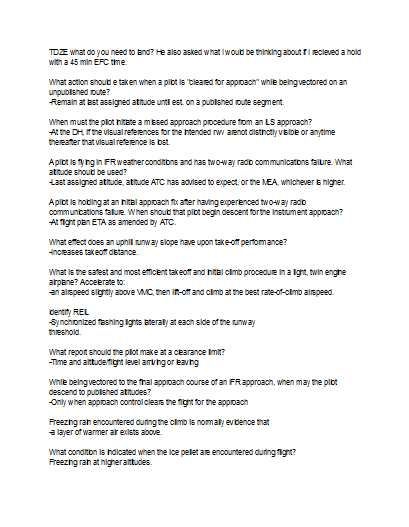
New 30 question exam: - VOR service volumes - localizer widths chapters 1 4 5 in the AIM Interview for street captain. Both interviews were cool, and we just discussed what they wanted from me, and what I was looking for. The sim session was short 20 minutes, arc, holding, ILS, VOR. I bought 3 hours. They need captains, and take care of them when they get them. I have had a wonderful experience during training, and in dealing with management. They expect me to work, and that's great... Continue reading this interview experience
-
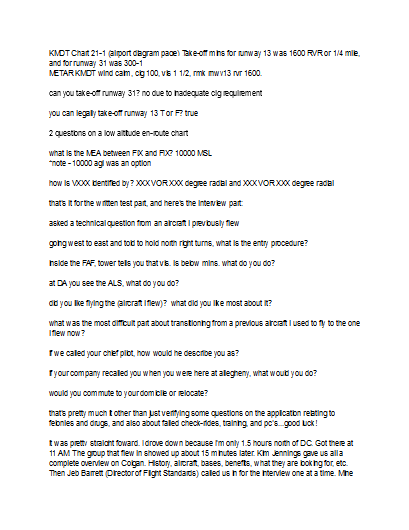
The other interview gouges are pretty accurate. My experience was a little different since I interviewed at the NW Aviation Conference in Washington State. I dressed in a full suit and brought my resume to present to Great Lakes. Met with pilot recruiter at booth, discussed times and flying experience (flying 135 in Alaska FO on BE1900 & C208). She then wanted me to meet with Chief Pilot (present at conference) and we discussed same subjects and scheduled an... Continue reading this interview experience
-
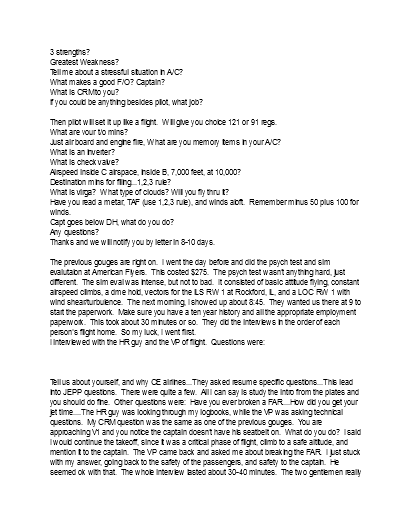
What a fantastic experience, First and foremost. Hearing in 10 days, I'm very confident. The saying goes, "it's all about who you know." But it's about who you know that knows you. By all means, open yourself up to anyone who can help you. (applicable to life in general) but everyone you talk to can give you something different. The interview is at KAPA centennial Tac Air main terminal. You will meet Kyle (chief), Dave, (not sure his position) and Michelle Panel interview... Continue reading this interview experience










Read more with Facebook! -
Read more with Yahoo! -