
We've Helped 211,000+ Aviation Professionals Prepare for their Interviews!
Interview Info Study Guide All Companies
First contact is a phone interview with HR. A face to face is then scheduled. Positive spacing airline to CLE, rental car and hotel room is paid by the company. Arrived at 8:00am the day of interview. Coffee and PRIA paperwork as well as employment application and CANPASS application. Met with Training Manager and drove over to sim for sim eval. They will send you the profile via email so my suggestion is to get some PCATD time and fly the profile a couple of times. It is a C-421 but no single engine work. Just trying to weed out those with poor instrument skills. Drove back to HQ and had lunch on the... Continue Reading this Interview Experience
-
First contact is a phone interview with HR. A face to face is then scheduled. Positive spacing airline to CLE, rental car and hotel room is paid by the company. Arrived at 8:00am the day of interview. Coffee and PRIA paperwork as well as employment application and CANPASS application. Met with Training Manager and drove over to sim for sim eval. They will send you the profile via email so my suggestion is to get some PCATD time and fly the profile a... Continue reading this interview experience
-
Just read the previous submissions - they are right on. No pressure at this interview. Everyone was courteous and very easy going. All indications are that the company is solid and anticipating controlled growth. They are modernizing the fleet with mostly new BE400's. Eric anticipates 10 to 12 new hires per month till year's end. Looking to fill domiciles in ATL, MIA, MCO, maybe some others. Eric spent over 2 hours going over the company stuff. Then two program managers cami in for a... Continue reading this interview experience
-
Every experience below is right on. My interview was at 9 am, every person I met at Flight Options was very friendly and did their best to make me feel comfortable. Eric (pilot recruiter) is very helpful, and does his best to explain the ups and downs of working for flight options. After visiting with Eric for a while I went and had the technical portion. Pretty laid back, if you are military it would definately help to look over some jepp plates. if you are like me it would be good to... Continue reading this interview experience
-
All of the post were right on the money. I think the whole interview is just to see if you can handle being away from home alot ! I probably screwed the pooch by my reaction to some of the anwers I was given reference the flex schedule and also on the time spent as a first officer. I knew what to expect, but being there drove home the realization of the many days away, the 14 hour days and long upgrade time. I have nothing negative to say about the company or the process- just not what I... Continue reading this interview experience
-
Arrived in Cleveland Sunday night and stayed at the Holiday Inn paid for by Flight Options. Interview was at 9:00 am next morning. There were three of us invited for the interview. We all met at FLOPS location and met Eric Gerhard for first part of interview. Eric is a class act. He gives you the good, the bad, and the ugly of the company and holds no punches. He wants to make sure you want to work here and will be happy here if you decide to work here. Some of the gouges earlier mention... Continue reading this interview experience
-
Arrived at FLOPS in Cleveland at noon and met Eric. Spent about 2 hours with Eric going over pay, schedule, benefits, company manual, etc. He was very specific as to the "Good, Bad, and Ugly" of the company. Got the feeling during the time with Eric that he wasn't assessing me as an applicant just trying to determine if I was interested in working for Options. Took a tour of the place, pretty impressive to say the least, especially the "control room." After that, met with two line... Continue reading this interview experience
-
Its always nice to have this resource to prepare yourself for an interview. Even though there are not many submissions on Flight Options, what was posted back in Feb 2004 is still pretty much accurate. According to Eric Gerhard, Pilot Recruiter, Flight Options is at the beginning of a hiring window for the next few months. The Company is going through some changes as they shrink their fleet from 13 airplane types to just 4...the Beechjet/Hawker 400XP, Hawker 800XP, Citation X, and Embraer... Continue reading this interview experience
-
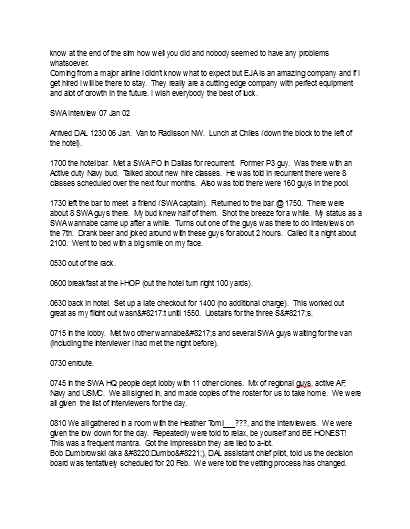
My interview experience was just like the others posted before except I had no simulator check. The sim is DFM. The interview started at 8:30AM. Myself and one other candidate spent the morning meeting with Eric the recruiter and learned all about the good and bad parts of the company. He basically just wants you aware of the negatives about working the 8 on 7 off schedule. He then gave us a personality test and took us on a tour of the facility. Very impressive place with many friendly... Continue reading this interview experience
-
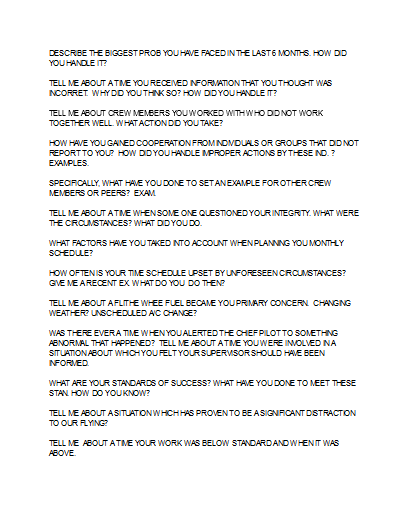
Everything here is right on! I agree that it is you job to lose. They really make you feel like they want you to work for them if they bring you in. They just spend the day trying to see if you really want to work for them. This place seems top notch. Everything is very straight forward. I can't wait to join the family. They make it feel like just that a family. Good luck everyone. Looks like they will be hiring for... Continue reading this interview experience
-
The interview was as described by the others. I have 5 friends who are employed there, so I get the feeling they knew quite a bit about me before I showed up. I think if you get the interview, they want to hire you (makes sense to me, why waste your money interviewing a ton of people and picking just the ones who look best in a suit). BTW they will fly you in and put you up. Everything is paid for by FltOps. When you meet with Eric and the others, they will tell you about all the... Continue reading this interview experience









Read more with Facebook! -
Read more with Yahoo! -